
Family Fitness: Building Resilience Together Through Movement
Published June 14, 2026 | PilatesFitness
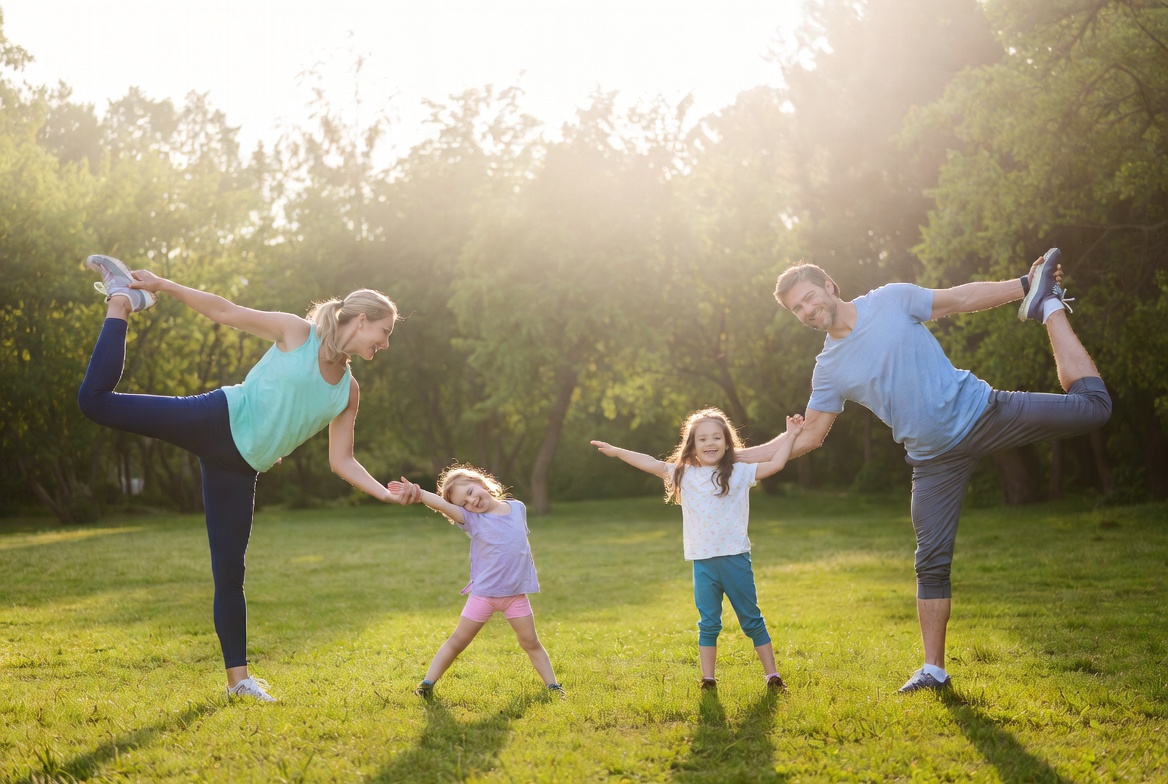
This weekend marks Family Health and Fitness Day, an annual observance dedicated to recognising the importance of physical activity as a shared family experience. While we often think of exercise as an individual pursuit, the most impactful fitness habits are those cultivated together—with your partner, your children, and your entire household moving as one unit.
Why Family Fitness Matters
Spending time together is essential—not just for couples to maintain their connection, but crucially for children to grow into resilient, confident adults. When families exercise together, they create something far more valuable than just improved physical health: they build a foundation of shared experiences, mutual support, and unspoken communication that strengthens every relationship within the family.
Family fitness is uniquely powerful because it accomplishes multiple goals simultaneously:
- It gets everyone moving – Both parents and children benefit from regular physical activity, establishing healthy patterns that last decades
- It creates screen-free time – In an age where social media and devices dominate attention, family exercise offers a rare opportunity to disconnect from technology and reconnect with each person in your family
- It teaches the value of group exercise – Children who exercise with their families learn to appreciate fitness as a social, enjoyable activity rather than a solitary chore
- It builds resilience – Children who spend active time with their families develop stronger emotional regulation, better stress management, and greater confidence in tackling challenges
The Perfect Season for Outdoor Family Fitness
This time of year—mid-June in the UK—lends itself beautifully to outdoor activities. The summer solstice is just seven days away, bringing us the longest days of the year with extended daylight hours. The weather is warming up, parks are inviting, and there’s an abundance of natural spaces perfect for family movement.
Consider these outdoor family fitness activities:
Walking and Hiking Adventures
Pick a local trail or nature reserve and explore together. Make it a game by creating a scavenger hunt, collecting leaves, or identifying birds. The conversation that happens while walking side-by-side is often more natural and open than sitting face-to-face.
Park-Based Play
Transform a visit to the park into a fitness session. Use the benches for step-ups, the open grass for stretching or yoga, and the playground equipment for climbing and strength work. Children naturally want to try everything, and parents can join in rather than just supervising.
Cycling Together
Whether you have a family bike with seats for younger children or everyone has their own bicycle, cycling is one of the most accessible forms of family exercise. It covers distance, builds endurance, and feels like an adventure rather than a workout.
Outdoor Swimming
If you have access to outdoor pools, beaches, or safe swimming areas, water-based family fitness is incredibly refreshing and low-impact. Swimming together, playing water games, or simply splashing in the shallows all count as physical activity.
Nature Yoga or Pilates
Bring your yoga mats or Pilates equipment to a quiet park spot. Children are naturally curious about what adults do for exercise, and watching (then joining) you in mindful movement teaches them that fitness can be gentle, intentional, and accessible at any age.
Making Family Fitness Sustainable
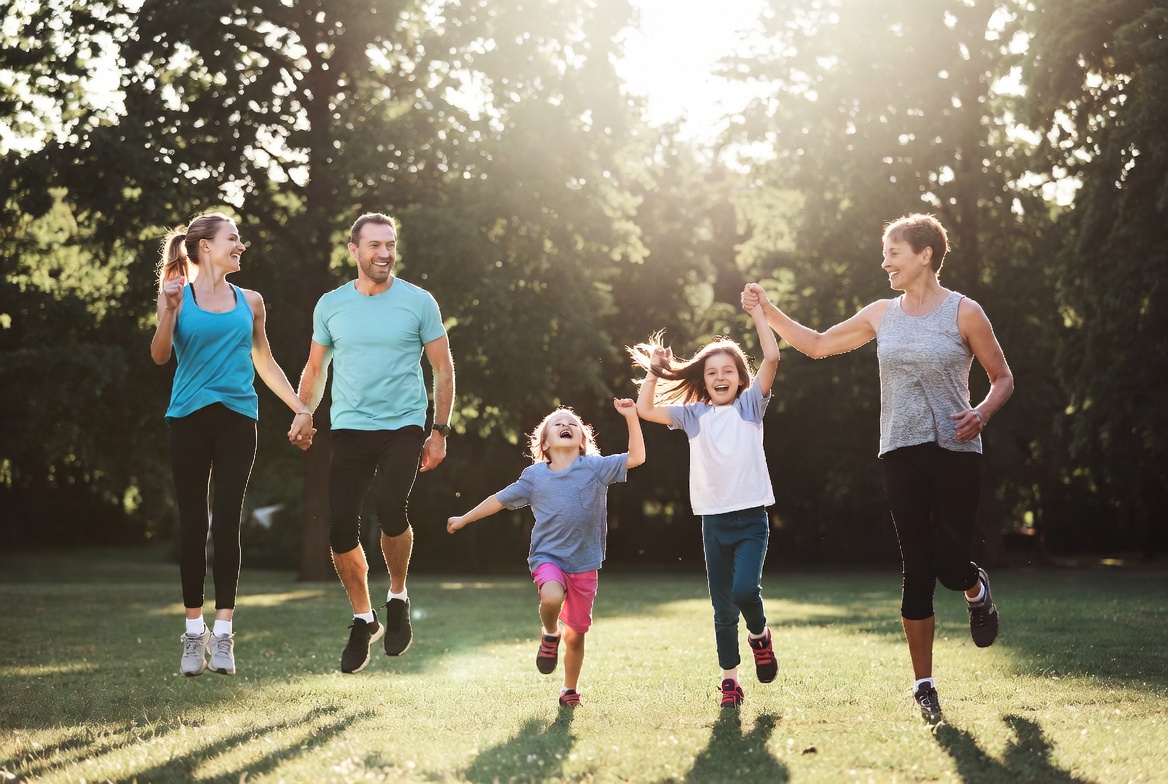
The key to lasting family fitness habits isn perfection—it’s consistency and enjoyment. Here are some tips:
Start small: Even 20–30 minutes of active time together counts. Don’t wait for the perfect hour-long session.
Make it fun, not punitive: Frame exercise as play, exploration, and adventure rather than something you “have to do.”
Let children lead: Give kids choices about what activity to do. When they feel ownership, they’re more engaged.
Be consistent: Try to schedule family fitness time weekly—if not daily. The ritual matters more than the duration.
Include the couple: Don’t forget that family fitness is also precious time for partners to reconnect while modeling healthy habits for children.
Embrace all abilities: Every family member moves differently. Celebrate effort over performance and make sure everyone feels included.
The Long-Term Impact
Children who grow up exercising with their families develop a fundamentally different relationship with physical activity. They don’t see exercise as something isolated, boring, or purely self-directed. Instead, they understand movement as:
- A way to connect with loved ones
- A enjoyable part of daily life rather than an extra task
- Something accessible at any age or ability level
- A social activity that strengthens relationships
These children grow into adults who value fitness not just for physical health, but for emotional well-being, stress management, and community building. They’re more resilient because they learned early that challenges can be faced together, that movement is joyful, and that their family supports their well-being.
Today’s Family Health and Fitness Day Challenge
On this Family Health and Fitness Day, commit to one active hour with your entire family. Whether it’s a walk in the park, a home workout where everyone joins in, a cycling adventure, or outdoor yoga—just move together. Put phones away, enjoy the summer daylight, and let the conversation flow naturally as you breathe and move side-by-side.
The investment you make in family fitness today will echo through your children’s lives for decades. They’ll carry forward the memory of exercising with their family, the confidence that comes from trying new things together, and the resilience built through shared physical challenges.
That’s the real gift of Family Health and Fitness Day: not just a day of movement, but a lifetime of connection through exercise.
Ready to make family fitness part of your routine? Join PilatesFitness for family-friendly classes designed for all ages
What is your favourite family activity?
Do you perhaps play badminton, kick the ball around or prefer to explore parks and forests? Let me know in the comment section!
References (Family Exercise Benefits)
- Santovia. “The Benefits of Family Exercise on Health and Happiness.” When families exercise together, they reduce chronic disease risk, create supportive environments for emotional well-being, increase happiness through endorphin release, strengthen emotional ties, improve communication, and set positive examples for children to adopt lifelong healthy habits. santovia.com
- Retos Journal (2024). “Exercise and family resilience.” Exercise improves family members’ health, reduces disease risk, and strengthens social relationships—all contributing to better family resilience and well-being. Research shows physically active families experience lower stress levels, improved mood, stronger emotional bonds, mutual support, and better communication. retos.fecyt.es
- Mayo Clinic Health System. “Exercise daily and raise a family?” Exercising as a family unit improves family bonds and role models the importance of physical activity to children, helping the whole family grow healthy together. mayoclinichealthsystem.org
- Family Prevention & Medicine (2023). “Family-based physical activity interventions and family functioning: A systematic review.” Family PA interventions promote family cohesion and organization, particularly among families with children aged 5-12 (early school years), improving general family functioning. wiley.com
- BMC Public Health (2018). Study cited by BullFit: Families participating in physical activity together reported higher family functioning and stronger emotional closeness. bullfit.com
- The Journal of Pediatrics (2020). Study cited by BullFit: Children with active parents are more than twice as likely to remain active through adolescence. Family routines around movement create consistency and accountability. bullfit.com
- Dave & Kristin Dussault. “Family Fitness: 5 Benefits of Exercising Together as a Family.” Families that exercise together improve attachment, social development, and emotional management. Exercise offers better communication platforms, lowers anxiety/stress/depression, and boosts interpersonal skills like problem-solving and conflict resolution. daveandkristindussault.com
- National Centre for Family Learning. “How physical activity can improve parental engagement.” Active Families has proven effective at helping families forge closer relationships, reduces isolation, and builds sustainable models of parental engagement in physical literacy and play. nationalcentreforfamilylearning.org
- Norfolk LSCP (2025). “The Power of Physical Activity to Enhance Resilience in Young People.” Physical activity increases endorphins, aids positive moods, improves emotional regulation, reduces anxiety, supports executive function, and develops coping mechanisms for long-term mental health resilience. Team sports and group activities foster social skills, confidence, and mental well-being. norfolklscp.org.uk