
Why Quitting Tobacco Matters for Cancer Risk, Health, Longevity
A Personal Note
This topic is deeply personal to me. Several people in my family died from smoking-related diseases. Their lives ended sooner than they were meant to be, and often in a nastier way than anyone should have to endure.
Seeing what they went through—the pain, the struggle, the preventable loss—made me realize how important it is to share the truth about smoking cessation. The science is clear: it’s never too late to quit. Every day without smoking is a victory. Every year of added life is precious.
*
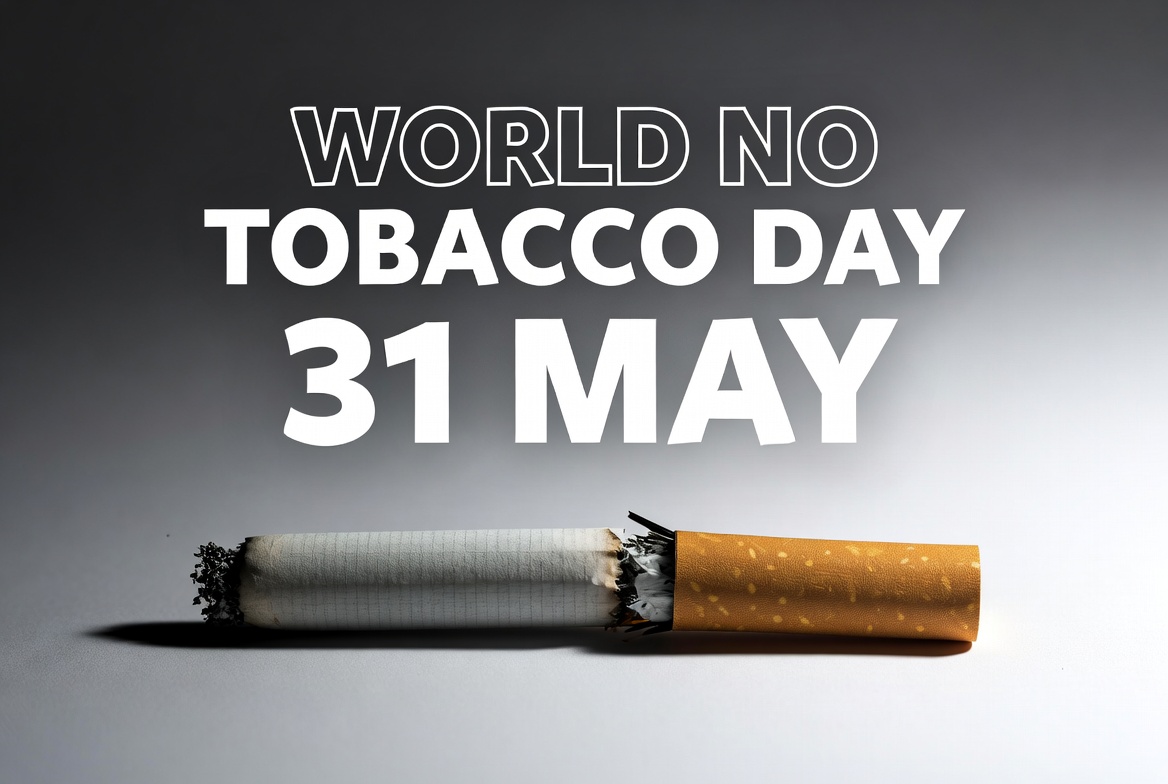
World No Tobacco Day is a powerful reminder that tobacco use harms health in many ways, and that quitting is one of the most meaningful choices a person can make for their future. Smoking, chewing tobacco, and other forms of tobacco use are linked to
- cancer
- heart disease
- lung disease
- stroke
- many other chronic conditions
Stopping tobacco use is not just about avoiding disease; it is also a major step toward better fitness, higher energy, and longer life.
Tobacco is one of the leading preventable causes of cancer worldwide.
- It damages DNA
- increases inflammation
- exposes the body to toxic chemicals that can affect nearly every organ
Smoking is strongly linked to the following cancers:
- cancers of the lung
- mouth
- throat
- larynx
- esophagus
- pancreas
- bladder
- kidney
- cervix
- several other cancers
Chewing tobacco is also dangerous, especially for cancers of the mouth, throat, esophagus, and pancreas.
Quitting tobacco lowers cancer risk over time, even after years of use. The earlier a person stops, the greater the benefit, but it is never too late to quit. After quitting, the body begins to repair itself almost immediately. Heart rate and blood pressure begin to improve, circulation gets better, and breathing often becomes easier. Over time, the risk of heart disease, stroke, and many cancers declines.
The benefits of quitting go beyond disease prevention. Many people notice:
- better stamina
- improed exercise tolerance
- stronger taste and smell
- better sleep
- fewer respiratory symptoms
- For people trying to get fitter, tobacco cessation can make workouts feel easier and recovery more efficient.
- better skin health, oral health, and overall day-to-day energy

Stopping tobacco use can also improve quality of life in less obvious ways. People often:
- save money
- reduce dependence on nicotine
- gain more control over their routines
- may feel more confidents in social situations
- may feel less tied to cravings or the cycle of using tobacco to manage stress
- save money, reduce dependence on nicotine, and gain more control over their routines. They may feel more confident in social situations and less tied to cravings or the cycle of using tobacco to manage stress.
For many, quitting becomes part of a broader commitment to better nutrition, movement, sleep, and mental wellbeing
“World No Tobacco Day” is a good moment to think about tobacco as one part of a larger health picture. Longevity is built from many small choices that reduce risk and support resilience.
- Avoiding tobacco
- staying active
- eating well
- sleeping enough
- managing stress
- all work together to protect long-term health.
Among those choices, quitting tobacco is one of the most impactful.
If you are using tobacco, the best time to stop is now.
If you have already quit, every tobacco-free day is a win for your body.
If you support someone else in quitting, that support can make a real difference. World No Tobacco Day is not only about awareness — it is about action, hope, and a healthier future.
REFERENCES
Scientific References – Smoking Cessation & Longevity Claims
- Jha P, et al. “Smoking Cessation and Short- and Longer-Term Mortality.” NEJM Evidence. 2024;3(3):EVIDoa2300272.
- 1.5 million adults tracked over 15 years across US, UK, Canada, Norway
- Quitting before age 40: live almost as long as never-smokers
- Quitting at any age: return to near never-smoker survival within 10 years
- Half the benefit occurs within just 3 years
- Smokers aged 40-79 face 3× higher death risk, losing 12-13 years of life
DOI: 10.1056/EVIDoa2300272 - https://evidence.nejm.org/doi/full/10.1056/EVIDoa2300272
- Habib AR, et al. “Benefits of Smoking Cessation for Longevity.” American Journal of Public Health. 2002;92(6):990-996.
- 877,243 participants in Cancer Prevention Study II
- Quit at age 35: gain 6.9-8.5 years (men) and 6.1-7.7 years (women)
- Quit at age 65: still gain 1.4-2.0 years (men) and 2.7-3.7 years (women)
- Cessation at any age provides meaningful life extension
DOI: 10.2105/ajph.92.6.990 | PMID: 12036794 - https://scholars.duke.edu/display/pub742776
- University of Michigan School of Public Health. “The Benefits of Quitting Smoking at Different Ages.” American Journal of Preventive Medicine. 2024. DOI: 10.1016/j.amepre.2024.06.020
- Quitting at age 75 still meaningfully extends life expectancy
- First study to analyze smoking cessation impacts on 65+ age group
- Benefits diminish with age but older adults still gain significantly
- https://www.eurekalert.org/news-releases/1060554
- American Cancer Society. “Health Benefits of Quitting Smoking Over Time.” Updated May 2025.
- Timeline of health recovery after quitting: 20 minutes to 15 years
- Never too late to quit — sooner quit, more cancer/disease risk reduction
URL: https://www.cancer.org/cancer/risk-prevention/tobacco/guide-quitting-smoking/benefits-of-quitting-smoking-over-time.html
- WHO World No Tobacco Day Campaign Materials. World Health Organization.
- Official global campaign resources and health messaging
URL: https://www.who.int/campaigns/world-no-tobacco-day
- Official global campaign resources and health messaging