GMOs are NOT The Answer

Courtesy of: NYTimes – https://static01.nyt.com/images/2016/09/16/business/GMO1/GMO1-superJumbo.jpg

THE PROMISES of GMOs

The promise of genetic modification was twofold: by making crops immune to the effects of weedkillers and inherently resistant to many pests, GMOs were expected to:

a) grow so robustly that they would become indispensable to feeding the world’s growing population, and at the same time

b) require fewer applications of sprayed pesticides

Comparing results on two continents, using independent data as well as academic and industry research, shows how the technology has fallen short of the promise.

  1. UNIMPRESSIVE YIELDS

Genetic modification in the United States and Canada has NOT accelerated increases in crop yields or led to an overall reduction in the use of chemical pesticides. An analysis by The Times using United Nations data showed that the United States and Canada have gained no discernible advantage in yields — food per acre — when measured against Western Europe. [1]

The Times compared Western Europe with Canada in terms of rapeseed production. Despite rejecting genetically modified crops, Western Europe has maintained a lead over Canada in rapeseed yields. While that is partly because different varieties are grown in the two regions, the trend lines in the relative yields have NOT shifted in Canada’s favor since the introduction of G.M. crops, the data shows. [1]

For corn, The Times compared the United States with Western Europe. Over three decades, the trend lines between the two barely deviate. And sugar beets, a major source of sugar, have shown stronger yield growth recently in Western Europe than the United States. [1]

Jack Heinemann, a professor at the University of Canterbury in New Zealand, did a pioneering 2013 study comparing trans-Atlantic yield trends, using United Nations data. Western Europe, he said, “hasn’t been penalized in any way for not making genetic engineering one of its biotechnology choices.” [1]

2. HIGH PESTICIDE USE

At the same time, herbicide use has increased in the United States, even as major crops like corn, soybeans and cotton have been converted to modified varieties. And the United States has fallen behind Europe’s biggest producer, France, in reducing the overall use of pesticides, which includes both herbicides and insecticides. [1]

“Currently available G.M. crops would not lead to major yield gains in Europe,” he said. And regarding herbicide-resistant crops in general: “I don’t consider this to be the miracle type of technology that we couldn’t live without.”, says Matin Qaim, a researcher at Georg-August-University of Göttingen, Germany,

PRESENT & FUTURE

Newer genetically modified crops claim to do many things, such as protecting against crop diseases and making food more nutritious. We cannot believe these claims at face value, as previous claims have just NOT stacked up.

Shifting crucial crops like corn, soybeans, cotton and rapeseed almost entirely to genetically modified varieties in many parts of the world is a huge marketing opportunity but also a major threat to our health. [2]

REFERENCES

[1] Doubts About the Promised Bounty of Genetically Modified Crops

[2] Why We Need to Avoid GMOs


Posted in Uncategorized | Leave a comment

Why We Need to Avoid Monsanto, RoundUp, Glyphosate and GMOs

Here are many reasons to stay clear of Monsanto:

  1. Roundup herbicide and Roundup Ready seeds have been show to significantly negatively impact human health. Sales of Roundup herbicide and Roundup Ready genetically engineered corn, soy and cotton constitute 90% of Monsanto’s revenue.
  2. For example, the World Health Organization declared Roundup’s active ingredient, glyphosate, a probable human carcinogen. Since that announcement in March, 2015, several countries, cities, and retail chains worldwide have banned or severely limited the use of glyphosate products. As of October 2015, at least 700 personal injury non-Hodgkin lymphoma lawsuits were pending against Monsanto.
  3. Monsanto’s liability may persist long into the future. Not only can glyphosate be detected for decades in many types of soil, GMO contamination self-propagates in the gene pool and cannot be fully eradicated.
  4. Numerous livestock farmers who switch to non-GMO feed report improved livestock health and increased profits. If these claims are validated, Monsanto could lose its biggest GMO market and become liable for extraordinary cumulative losses from an entire industry.
  5. Monsanto’s GMOs—designed to either kill insects or tolerate Roundup herbicide—are failing in the field; as of 2010, superbugs and superweeds are becoming resistant on over 300 million acres worldwide.
  6. Consumer rejection of GMOs in the United States is prompting food brands to eliminate GMO ingredients and label products “non-GMO.” This same trend kicked GMOs out of Europe in 1999 and is now approaching a tipping point in the US, as 58% of consumers are looking for non-GMO products.
  7. Monsanto’s success has been propped up by enormous political clout, especially in the United States. Politics is unstable; it shifts with elections and current events. As the non-GMO movement gains momentum and product safety is questioned, political support may wane, further eroding Monsanto’s fortunes.
  8. Monsanto’s negative reputation adds political and economic instability. Referred to as the “World’s Most Hated company,” their unpopularity was illustrated when hundreds of Moms Across America groups nationwide, and more than 2 million people in 52 countries internationally, took to the streets to “March Against Monsanto.”
  9. Monsanto’s GMOs have proven to be more affected by climate change (e.g. periods of droughts) than traditional varieties, leading them to failing more often and leading to more financial failures / bankruptcies.
  10. Because of GMOs being more sensitive to climate change, Monsanto is basically bankcrupting many farmers in Third World countries (where additional irrigation facilities are less likely to be available).
  11. Monsanto insists on yearly seeds purchase: this company forces farmers (including poor farmers from third world countries) to purchase their seeds year after year (no chance of saving seeds from one year to the next, as has always been traditionally done).
  12. Monsanto sues organic farmers who have had their crop damaged by Monsanto seeds. Such events should lead to GMOs being outlawed or very strongly restricted, not to the injustice of making the innocent pay.
  13. Monsanto and other GM companies patenting nature? Monsanto and others are acquiring traditional seeds for free, modifying them “a little” (often with many negative consequences) and then patenting them and selling them at a huge profit. Year after year. Does this sound like a fair practice?
  14. Questions about GM Foods? This document may help answer them: http://www.gmwatch.org/files/10-Questions-about-GM-Foods.pdf

Sources:

http://www.huffingtonpost.com/entry/avoiding-monsanto_us_56a79387e4b01a3ed123d72d?ir=Green§ion=us_green&utm_hp_ref=green

http://www.gmwatch.org/files/10-Questions-about-GM-Foods.pdf


Posted in GMO | Tagged , | Leave a comment

GRATITUDE – September 2016

to follow…

Posted in Gratitude, Healing | Tagged | Leave a comment

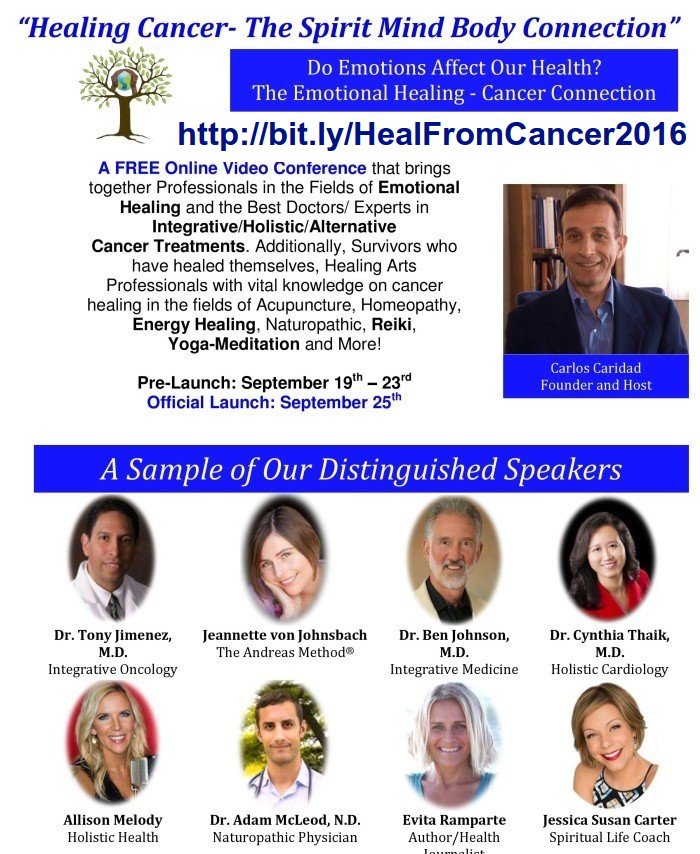
Healing Cancer – The Spirit Mind Body Connection

Healing Cancer - The Spirit Mind Body Connection

Healing Cancer In This Century
The Spirit – Mind – Body Connection

A FREE Online Conference
September 25th – October 1st, 2016

This online video conference creates a shift in human consciousness of the awareness that we are not just a physical body. Emotional trauma, chronic negatives emotions that affect our health are at the root cause of cancer and other health conditions, which illustrates the importance of emotional healing.

The online video Summit brings together, in an unprecedented way, over 35 Speakers including doctors/experts in the field of integrative/holistic/alternative cancer treatments with Energy Healers from different modalities, Cannabis Health experts, experts in the fields of Emotional Healing and Healing Arts like Acupuncture, Homeopathy, and Chiropractic, survivors who have healed themselves and more. All cutting edge Healing Methods for this Century!

Sign up here: http://bit.ly/HealFromCancer2016


Posted in Cancer, Disease / Condition, Emotional Health, Healing, Mind Body Connection | Tagged , , , | Leave a comment

Glyphosate Found – in ALL Honey Samples Tested

Honey

The Food and Drug Administration (FDA) has found fresh evidence that residues of the weed killer called glyphosate can be pervasive – found even in a food (like honey) NOT produced with the use of glyphosate. This raises very serious questions about the persistence of glyphosate (a “probable human carcinogen” according to the World Health Organisation) and the main “active” ingredient of RoundUp pesticide made by Monsanto and very widely used for GMO crops.

The FDA found glyphosate in all samples of U.S. honey it tested in a recent analysis – some with DOUBLE the residue levels legally allowed in the European Union.

a) There is no legal allowed level for glyphosate in honey in the United States

b) and why on earth is there an ALLOWED LIMIT of glyphosate in Europe? Obviously there is a lot of glyphosate use in Europe and someone was expecting it to be everywhere all over our produce. There should be no glyphosate in our food at all !!!

FDA has not made public the findings of its honey examination. So US Right to Know did (when they finally did get the info).

Read the not-so-sweet story here and please share: http://huff.to/2d2wdWr 

Posted in GMO | Tagged , , , | Leave a comment

Prevent Dementia

Dementia is on the rise world-wide

People living with dementia around the world

People living with dementia around the world


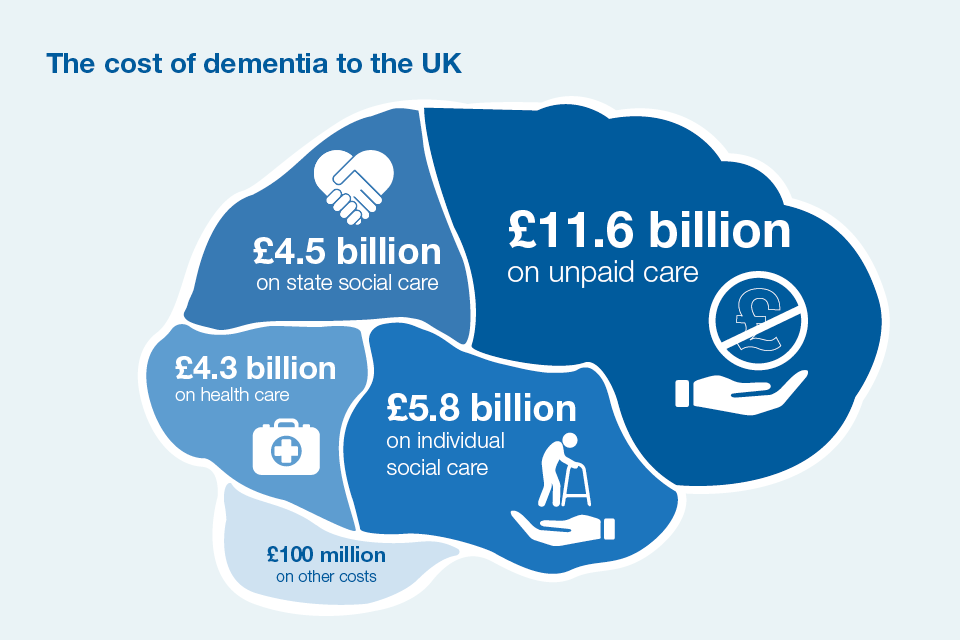
Dementia is a costly societal problem, as this graphic from the UK government shows.

image - Cost of Dementia to the UK

Cost of Dementia to the UK


But above all, dementia is a terrible condition for the individual involved and perhaps even more for their families and friends – it is very hard to relate to a friend or relative who can no longer recognise us! In fact, most people fear dementia more than cancer and death itself.

Here are some of the symptoms of dementia:

It is clear that it is important and very desirable to stave off dementia. And healthy lifestyle choices can help a lot in this regard.

But how do we know how well we are doing so far? Are we at risk? Luckily some tools are becoming available lately.


How to prevent dementia?

A useful approach to preventing dementia might involve:

Step 1: Check what your current status is

Step 2: determine what course adjustments are needed

Step 3: implementing them consistently over time


How to check your current dementia risk:

Doctors are developing a test which will reveal our “brain age” by asking a series of lifestyle questions (including fitness, drinking, smoking, weight and cholesterol) that are currently thought to increase the risk of dementia later in life.

The new tool to calculate how many brain cells we are losing and how rapidly is being developed by Public Health England (PHE). It is designed to encourage us to engage with healthy habits before it is too late.

Don’t stick your head in the sand, and find out now!

animal thinking vintage

The computer-based test will be piloted by GPs and offered to middle-aged patients. It does not “diagnose” diagnose dementia, but it claims to give you a good indication of your “brain age” and therefore of your relative risk of dementia.

Ready? Here we go…

Answer each question either Yes or No

1. I get seven or more hours of sleep each night.

2. I eat at least five or more servings of fruits and vegetables high in antioxidants (citrus fruits, green peppers, spinach, broccoli, apples, tomatoes, kale) daily.

3. I eat at least one serving of blueberries, raspberries, or blackberries daily.

4. I eat baked or grilled fish high in omega-3 fatty acids (such as salmon and mackerel) at least three times a week.

5. I take fish oil supplements high in omega-3 fatty acids or flaxseed supplements at least five times per week.

6. I take folic acid supplementation with my daily multivitamin.

7. I take a low-dose of aspirin, which studies suggest might slow brain decline by maintaining bloodflow to the brain, daily.

8. I drink red wine or grape juice at least five times a week.

9. I exercise most days of the week for at least 30 minutes each time.

10. I read challenging books, do crossword puzzles or Sudoku, or engage in activities that require active learning, memorization, computation, analysis, and problem solving at least five times a week.

11. My total cholesterol is less than 5 millimoles per litre (mmol/l).

12. My LDL (“bad”) cholesterol – that causes disease in arteries and reduces blood-flow to the brain – is less than 3mmol/l (your GP or practice nurse can carry out a cholesterol test and will take a blood sample either with a syringe or by pricking your finger).

13. I have “longevity genes” in my family, with members who lived to 80 and older without memory loss.

14. I am not obese (less than 1st4lbs overweight for a woman; less than 2st1lb overweight for a man).

15. I eat a Mediterranean style diet (high in fruits, vegetables, whole grains, beans, nuts, and seeds, and olive oil as the source of fat; little red meat).

16. I use olive oil and no trans-fat spreads instead of butter or margarine.

17. I have never smoked cigarettes.

18. I have normal blood pressure.

19. I do not have diabetes.

20. I do not have metabolic syndrome (the medical term for a combination of diabetes, high blood pressure and obesity).

21. I do not have a sleep disorder such as snoring or obstructive sleep apnoea or untreated insomnia.

22. Daily uncontrolled stress is not a problem for me.

23. I have a strong support group and enjoy many activities with friends, colleagues, and family members.

24. I have no problems with short- or long-term memory.

25. I’m ready to prevent Alzheimer’s and will do whatever it takes.

Count how many of the 25 statements you marked ‘Yes’ and write down your score.

HOW TO INTERPRET YOUR SCORE:

23–25 Subtract 15 years from your chronological age for your Real Brain Age. Unless things change, your risk is extremely low.

20–22 Subtract 10 years from your chronological age for your Real Brain Age. You are doing a lot to take care of your physical and mental health. Pay attention to those questions you marked ‘No’ to see what changes you need to make.

15-19 Your Real Brain Age is the same as your chronological age. You could be at risk of developing dementia and should pay attention to questions you answered ‘No’ to and make changes.

12–14 Add five years to your chronological age for your Real Brain Age. With this disparity between your Real Brain Age and chronological age, you could have increased the chances of dementia. Review your answers and where needs work, and visit your GP to discuss the results.

0–11 Add 10 years to your chronological age for your Real Brain Age. Get in touch with your doctor to discuss health problems you have and what you can do to manage any problems.

How did you do? Let me know in the comments below…

THERE IS A LOT YOU CAN DO TO PREVENT DEMENTIA

This (above) is what the test says. In reality, the doctor is not the only person that can help. There is A LOT of stuff you yourself can do, from nutrition and targeted supplementation to stress management and exercise. In general, anything that makes your BODY healthier, also makes your BRAIN healthier. But you need the correct information to act upon, as well as the motivation and support to consistently apply the new lifestyle changes.

1. Improve Your Diet. Start from incorporating more fruit and vegetables in your diet, and “brain-friendly” foods, including the 5 “brain superfoods” below (one might say that there are no actual “brain superfoods”, but these foods are a pretty good start!)

Brain superfoods

Brain superfoods

2. Avoid “PolyPharmacy Hell”

Dr Jon Barron reports that, in 2013, the average number of prescriptions per capita in the United States was:

  • 50-64 years old: 19.2 prescriptions per person
  • 65-79 years old: 27.3 prescriptions per person
  • 80+ years old: 29.1 prescriptions per person

Nearly 50% of older adults take one or more medications that are NOT medically necessary

The problem is that it is simply impossible for anyone to understand all of the possible side effects that can occur from mixing that many drugs. In fact, medical authorities now believe that such side effects may represent 15-30 percent of all DEMENTIA diagnoses.

One-in-four patients suffer “observable” side effects from prescription drugs

A further, even bigger, problem with taking so many medications is that research has clearly established a strong relationship between polypharmacy (taking multiple medications) and negative clinical consequences such as cognitive impairment, functional decline, and falling.

Obviously, some medications may be necessary. But you can use a healthy lifestyle to AVOID having to go on so many of them in the first place!

3. Keep your HDL Levels High

If your levels of the ‘good’ HDL cholesterol are too low, you increase your chances of a poor memory – and it may eventually lead to Alzheimer’s disease. So do all you can (e.g. diet, exercise) to keep your HDL cholesterol levels high enough. Some doctors believe that this means most people should also AVOID taking statins.

4. Perfect Your Nutrition and Supplementation Plan

Proper nutrition and targeted supplements can support your brain and healthy aging.

If you want to find out why a specific type of nutrition plan seems to help Alzheimers and other brain-related conditions, or the specific fats you should include in your diet daily (and at what times of the day), you may want to ask me, or watch the Alzheimers summit.

5. Start exercising!

Exercising in mid-life has been shown to help prevent dementia when you are older. While it is always positive to start being physically more active. starting around 49 years of age will prevent dementia when you are older. A study run by the University of Helsinki tracked the health of 3,050 twins in a 25-year study. Participants who did intense exercise but ALSO those who did MODERATE exercise (a little more than walking), had better cognitive abilities when they were 75 than those who did no exercise at all.

In animal studies, lack of exercise is one of the risk factors for dementia in old age, along with obesity and diabetes, in animal studies. The Finnish Twin Cohort study is one of the first to establish this same risk in humans, and also to determine the level of exercise that needs to be performed to avoid dementia.

Walking, and any type of exercise will help (in different ways and to different extents).

  • Walking – A study of 2,257 men aged between 71 and 93 years assessed for two years. reported that during that time 158 developed dementia. Researchers found that the men who walked less than a quarter of a mile every day were nearly twice as likely to develop dementia compared with those who walked two miles a day.
    Clearly exercise and taking the air have a part to play in mental well-being but the thinking that goes with it will also help. In short: walk MORE than a quarter of a mile every day, and ideally more (2 miles).
  • Other types of exercise may stimulate the mind more directly, though any exercise will help ONLY if it is being carried out (as opposed to skipped).

Personally, I am a great fan of Pilates, yoga and tai chi (for the mind-body aspect), as they all improve balance,  muscle coordination and body awareness, as well as improving strength. In other words, they work on the link between brain and body.

Get Expert Advice

Exercise stimulates the brain to stay healthy and youthful! While you can experience some benefits just walking (as seen above), you can experience further benefits in my classes (all suitable for over 50s, 60s etc). To discuss your health and fitness needs, do get in touch!

Emanuela

Personal Trainer, Rehab Trainer, Pilates Specialist and Sports Massage Therapist

contact me at www.pilatesfitness.co.uk

REFERENCES

https://www.gov.uk/government/publications/health-matters-midlife-approaches-to-reduce-dementia-risk/health-matters-midlife-approaches-to-reduce-dementia-risk

http://www.huffingtonpost.co.uk/2014/11/05/brain-age-dementia-test_n_6105314.html

https://www.bupa.com/corporate/our-purpose/healthy-ageing-and-dementia/bupa-and-dementia

https://jonbarron.org/doctors-and-drugs/polypharmacy-hell

http://health.usnews.com/health-news/blogs/eat-run/2012/11/02/mind-games-how-to-prevent-dementia

https://www.wddty.com/news/2016/09/mid-life-exercise-helps-prevent-dementia-when-youre-old.html

https://www.wddty.com/magazine/1990/may/keep-on-walkin.html


Posted in Alzheimer's, Dementia | Tagged | Leave a comment

HPV Vaccine – AVOID !

china-hpv
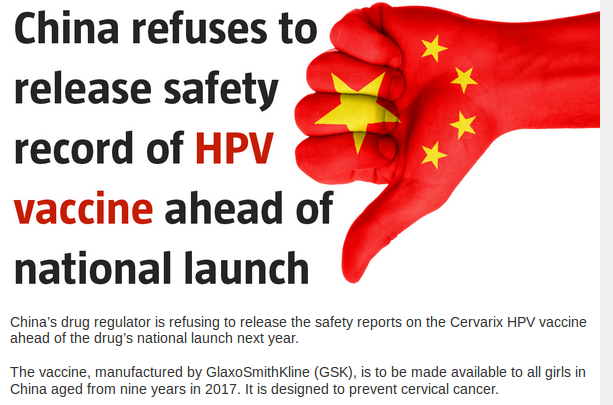
China’s drug regulator is refusing to release the safety reports on the Cervarix HPV vaccine ahead of the drug’s national launch next year. The vaccine manufactured by GlaxoSmithKline (GSK), and supposedly designed to prevent cervical cancer, is to be made available to all girls in China aged from nine years in 2017.

Ahead of the launch (September 2016), it is reported to have been tested on 6,000 Chinese girls, but authorities are refusing to release the toxicology reports and clinical trial data that would reveal any side effects and adverse reactions suffered by the girls.

This is at the very least suspect. One reason for the secrecy could be because the results of the trial pointed to a serious issues which GSK may not want to disclose. At the very minimum, it could be because the trial was not properly constructed, and the vaccine was never tested against an inert placebo. As a result, adverse reactions could be experienced by those given the vaccine or the placebo, so reducing the risk profile of the vaccine itself.

Dr Sin Hang Lee, who studied in China but now lives in the US, says HPV vaccines have not prevented a single case of cervical cancer, and yet have been associated with tens of thousands of reports of adverse reactions in young girls, ranging from nervous disorders, chronic disabilities and even death.

Elsewhere in the world, the Japanese government withdrew its recommendation for the HPV vaccine in 2013, after highly publicized cases of alleged adverse events in girls who had been vaccinated and several cases of parents suing the government and the vaccine makers for damages due to HPV vaccination. So currently the vaccine cannot be actively promoted, though parents can choose to vaccinate, if they understand the risks. Moreover, Japan has put in place a scheme to deal with chronic symptoms after HPV vaccination

April 2017 Update: the US agency CDC updates the “immunization” schedule and adds new HPV vaccine with double the aluminium (a well-known neurotoxic). New recommendations say the vaccine can be administered as young as 9 years old but with an average of 11 or 12 for the first dose.

However, the American College of Pediatricians (ACP) expressed serious concerns about Gardasil in January of 2016. The HPV vaccine has been linked with POF (premature ovarian failure, or “premature menopause”), as well as amenorrhea (absence of menstruation).

Gardasil also contains polysorbate 80, a compound linked with ovarian toxicity in experiments done with rats. Polysorbate 80 has also been connected with severe anaphylactic reactions, encephalitis and multiple sclerosis.

Other disturbing effects of the HPV vaccine are autoimmune conditions, permanent disability and early death in young women. For instance: http://www.ageofautism.com/2011/09/michele-bachman-meet-dr-diane-harper-lead-researcher-for-gardasil-vaccine.html

Despite these HPV vaccine side effects, a new “super” version of the HPV vaccine called 9vHPV vaccine is now being pushed. The vaccine makers claim the new version targets nine strains of HPV and 80 percent of vulvar, cervical and anal cancers, up from 65 percent by the previous version. It’s being sold under the name Gardasil 9 and is being marketed as an “improvement” over the previous version.

Isn’t this good news? Don’t we need protection against the HPV virus?

Despite these claims made for it, Gardasil 9 has double the toxic aluminum of the previous one. How the potential risks of aluminum exposure are worth any supposed benefits is hard to believe by any reasonable (thinking) person.

The World Health Organization (WHO) has found that the death rate from cervical cancer is actually 2.5 times LOWER than the very serious complications and side effects documented from the HPV vaccine. In some parts of the world, HPV vaccine risks are as much as FOUR TIMES higher than the cervical cancer death rate.

Find out the truth about vaccines here:
http://pilatesfitness.co.uk/blog/?p=677

REFERENCES

https://wddty.com/news/2016/09/china-refuses-to-release-safety-record-of-hpv-vaccine-ahead-of-national-launch.html

HPV Vaccination Controversy in Japan, Rates Plummet to 1% – http://www.medscape.com/viewarticle/866405

Victims in Japan Sue for Damages Due to Gardasil and Cervarix HPV Vaccines

http://www.naturalhealth365.com/immunization-schedule-2217.html

http://www.ageofautism.com/2011/09/michele-bachman-meet-dr-diane-harper-lead-researcher-for-gardasil-vaccine.html


Posted in HPV | Tagged , , | Leave a comment

GRATITUDE – August 2016

to follow….

Posted in Uncategorized | Leave a comment

Pilates Practice – Summer 2016


[is_user_logged_in]
Hopefully the Hinckley Pilates gang will be able to access
this page, and they will find it good enough for their purposes!
[hss-embed-video videoid="43435" version="full"]
[/is_user_logged_in]


Authorized user but cannot see the promised content?

Log in first!

[members_login_form]

[/members_login_form]


Posted in Uncategorized | Leave a comment

July 2016 Gratitude

to follow…

Posted in Gratitude | Tagged | Leave a comment