Food Revolution Summit


Food Revolution Summit 2014

*** The Food Revolution Summit 2014 ***

http://goo.gl/jynkgx

Woody Harrelson and other leading food experts are giving their top insights in the Food Revolution Summit April 26-May 4. Listen for free and get empowered!

http://goo.gl/jynkgx

Tags: sustainability, food, policy, nutrition, lifestyle, health, summit

Posted in summit | Tagged , , , , , | Leave a comment

Walking Boosts Creativity

walking-child-pixabay

WALKING BOOSTS CREATIVE THINKING

Research in the Journal of Experimental Psychology: Learning, Memory and Cognition (April 2014) shows that walking boosts creative thinking, which is perhaps why walking meetings have had some success (in spite of being “non-traditional”).

The good news is that the act of walking — even on a treadmill — does the trick! Dr. Marily Oppexxo and Daniel Schwartz, professors at Stanford Graduate School of Education found that compared with sitting down, walking indoors on a treadmill facing a blank wall or walking outdoors in the fresh air produced twice as many creative responses.

In one particular experiment carried out indoors, participants walking on a treadmill scored an average of 60% higher on divergent thinking creativity than when they were sitting.

Divergent thinking [note: this sounds like Edward De Bono’s “Lateral Thinking” to me] is when you generate ideas by thinking of lots of possible solutions. So, if you are ever stuck on how to solve a problem, a walk is what you need!!!

This may be one of the best reasons to get up from your desk or couch (together with doing your body a favour).

If you do walk (at home or outdoors), do not look at your mobile phone/tablet/other screen while you do! Unplug for a little while!

NOTE: Walking had no positive effect on the type of thinking that requires focused concentration (like writing a report or computer programming). However, speaking from experience, I can say that:

  • having had a walk will help you focus better when you DO sit down (or stand) to focus on your work afterwards
  • if you cannot find a bug in your code, go for a walk (or exercise). You will then easily spot the bug(s) when you get back to your desk! It works like magic.

Sources & References:

http://www.apa.org/news/press/releases/2014/04/creativity-walk.aspx

http://www.medicalnewstoday.com/articles/276035.php

Edward De Bono – Lateral Thinking – http://amzn.to/2xHnf8A


Tags: walking, creativity, lateral thinking, divergent thinking

Posted in Walking | Tagged , , , | Leave a comment

Think Scientists Cannot Make Mistakes?

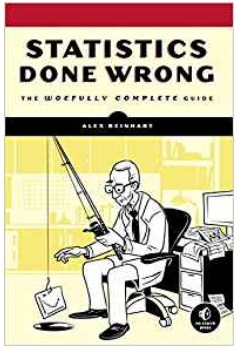
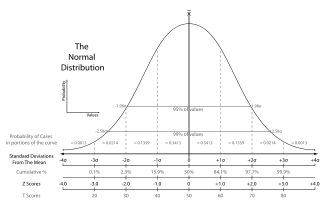
StatisticsDoneWrongOnBeingAScientist

I cannot help laughing when someone says that they only believe in science and what papers published in peer-reviewed journals say, as if 100% of what they describe was truthful and correct.

Even leaving aside the various well-known cases of outright science fraud (and the many we do not yet know about), it is crazy to think scientists are always correct and simply cannot make mistakes or be subject to bias. Anyone working in academia (or data analysis) is painfully aware this is not the case. (see references)

I am reminded of something that happened probably a decade ago now.

A UK University professor was chastised for using the wrong kind of statistical analysis on the data used in the studies her group had been publishing. She responded with an apology, and added she was sorry about the mistake they had made, though she was a bit puzzled as her team had been publishing papers along the same lines (using the same type of data and the same type of statistical analysis) for 5 years and various peer-reviewed journals had – up until then – happily kept publishing their papers without comment.

What does this illustrate?

– (non-statistics) professors and their teams may make mistakes in areas outside their main scope of expertise, such as statistics

– professors may not be doing their own stats for use in their own papers (or they may really suck at stats or be subject to some bias related to looming deadlines, publication requirements, need for further funding and such)

– research assistants and research students should be up to scratch with statistical knowledge or get the required help from someone in the area. A statistics specialist should probably be enlisted in each group project. This does not happen all the time, it seems, though specialist statisticians and statistics Master study programmes have been cropping up all over the UK in recent years.

– the team leader should probably oversee and check over everything, but this may in practice not be happening for various reasons, including time constraints

– these mistakes may not be spotted for a long time, leading to many incorrect results being deemed  correct and spread around the research universe and referenced by other researchers (when in fact they are incorrect), thus corrupting the integrity of the “total body of evidence”

– peer-reviewed journals and their vetting processes are far from infallible

– you always need to use your own head and not rely on other people’s interpretation of the data (possibly even questioning their data sample)

– sometimes, the data can be questionably “massaged” so as to give some welcome results. This may be harder to spot (without full access to the initial dataset), but this procedure is apparently often used by large companies and sometimes government organisations.

– exercise caution in accepting any results

– use your head. Don’t just read the results section (as someone with limited understanding once recommended), critically check details of all aspects of the study and check how the researchers arrived at their conclusions

– if the correctness of a study are important to you, really dig in, obtain the original data, information about any methods used and try to reproduce the results. This is a very informative process.

– If you cannot reproduce the result, don’t feel too bad. It may be a common case of replication crisis!

– If the paper uses a lot of jargon, a high degree of linguistic obfuscation and fewer first-person pronouns than expected, you may have another reason to be suspicious of the result it reports.

This is by no means an extensive list. A more technical explanation of what can go wrong at all stages of a statistical analysis and how to avoid these mistakes and biases, please see the “Recommended Resources” below.


Tags: research-quality, scientific-method, statistics
Emanuela
Pilates Fitness
ww.pilatesfitness.co.uk

Recommended Resources:

Posted in research, statistics | Tagged , , | Leave a comment

Connections and Happiness

” the happiest people tend to be those who spend one or two hours a day talking with close family and friends.”

http://goo.gl/lSIbIX

Are you making enough time for connections EACH DAY?

Your brain needs it (the time) and them (connections).


Connections


Posted in Uncategorized | Leave a comment

Walking Reduces Cardiovascular Risk As Much As Running

walking-pixabay-500

Brisk walking can reduce a person’s risk of diabetes, high blood pressure, and high cholesterol just as much as running can. Perhaps even a little more.

The finding came from a study published in the journal Arteriosclerosis, Thrombosis and Vascular Biology in 2013. This study, which lasted 6 years and examined 33,060 runners in the National Runners’ Health Study and 15,045 walkers in the National Walkers’ Health Study.

The investigators discovered that – as long as walkers and runners achieved the same distance –  moderate intensity walking and vigorous intensity running lead to comparable reductions in the likelihood diabetes, high blood pressure (hypertension), and potentially coronary heart disease.

Walking and running expenditure was evaluated by distance (not time, like previous research). So this seems to be some validation towards the theory of the number of steps a day required to promote health.

Results showed:

  • The risk for first-time hypertension was notably reduced 4.2% by running and 7.2% by walking.
  • The risk for first-time high cholesterol was reduced 4.3% by running and 7% by walking.
  • The risk for first-time diabetes was lowered 12.1% by running and 12.3% by walking.
  • The risk for coronary heart disease was lowered 4.5% by running and 9.3% by walking.

Looking at these figures, it seems that walking was MORE effective than running at reducing these measures that are usually considered markers for cardiovascular health/disease risk than running was. Of course, walking takes a bit longer, but it is more sustainable.

It is worth remembering that regular exercise in middle age has been shown to protect the heart.

So, you can either run or walk to reduce cardiovascular risk, or even better, do a mix of the two. Research on a small number (36) of college students had previously concluded that the best way to save energy and maintain endurance may be to alternate between walking and running.

NOTE: Cycling will also have benefits, but the study shown compared walking and running as they are more similar in terms of using the same muscles.

Sources:

https://www.ncbi.nlm.nih.gov/pubmed/23559628

https://www.medicalnewstoday.com/articles/258646.php

https://www.medicalnewstoday.com/releases/255686.php

www.pilatesfitness.co.uk

Posted in Exercise, Running | Tagged , , , , , , , | 1 Comment

Hello world!

Welcome to Pilates Fitness’s blog!

This blog is where I intend to share my thoughts on health and fitness in a bit more detail and with more flexibility than Facebook allows.

I think of this blog as not just “mine” but really the meeting place for the “Pilates Fitness circle”, meaning myself + any of you who have ever attended my classes and/or experienced my sports massages and particularly those of you who have been there week after week, months after month and year after year. I am very grateful to you all for the opportunity to grow together and support one another. Let’s share our thoughts on any Pilates, fitness and wellbeing topics here!

Guests with a genuine interest in these topics are also welcome.

Emanuela.


Posted in Uncategorized | Tagged | Leave a comment